BrandlandUSA: America's authority on legacy brands. News on classic brands and advertising.

 colors in the title include representations of Pan Am blue, Coke red, McDonald's yellow, Ford blue, IBM Big Blue, KFC, UPS, Deere, Starbucks, Campbell's Soup red, Baskin Robbins purple, Hertz yellow

Brands this U.S.A. Christmas

December 14th, 2012 · No Comments

By Garland Pollard

Nearly every consumer brand gets some play around Christmas, yet some brands are more distinctly associated with Christmas than others. Below, some posts from BrandlandUSA directly relating to Christmas, which is both a religious holiday and a secular consumer tradition.

Below, some of the stories in no particular order.

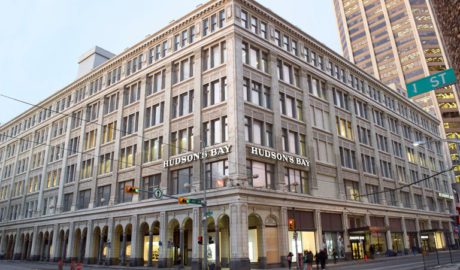
  1. Christmas List of Surviving Downtown Department Stores: Our roundup of top downtown department stores keeps a running list of the places in the U.S. where people can visit a true downtown department store. Please help us keep this up to date.
  2. History of GE Christmas lights. While no longer made by GE and no longer made in the U.S., the inventor of classics like Merry Brites played an important role in our Christmas tradition.
  3. Ann Page Fruitcake: People want this brand from A&P, and have loved these cakes for generations.
  4. Top Christmas Brands: Connecting your brand to Christmas with Christmas trinkets and promos. Have a Lexus, please, or a Remington Shaver.
  5. Coca-Cola: Merry Christmas from Coke, in that famous Hillside Singers commercial. Wonderful Lorri Hafer singing!
  6. Regional candy, including Barton’s Candy and Chocolate and Sevigny’s Christmas Ribbon Candy.
  7. Shiny Brite Ornaments History. The brand disappeared, but is now back.
  8. Heat Miser Returns on ABC Family. Oh so scary from Rankin-Bass. Glenn Beck even said he freaked him out as a kid.
  9. Life Savers Sweet Storybook, one of the classics that appear only at Christmas.
  10. Rebirth of the FAO Schwarz catalog.
  11. CBS, Bring back the Lou Dorfsman Special Intro. A CBS holiday special just isn’t the same without this classic intro.
  12. Folger’s: Each year, we get thousands of hits looking for the original Peter in the Folger’s Coffee commercial from the mid-1980s starring Greg Wrangler. See True story of the Folgers “Peter is Home” Commercial

→ No CommentsTags: Christmas

News Roundup: Looking for Ho Ho, Dan River Runs Again, Nabisco Push, A&P Fruitcakes

December 10th, 2012 · No Comments

By Garland Pollard

photo.JPGSARASOTA – A roundup of branding recent items in the news:

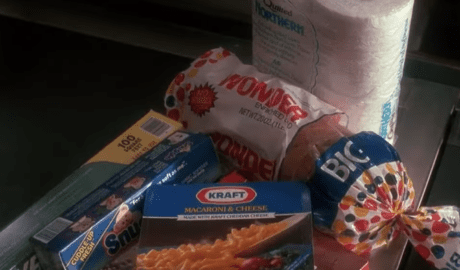
  • Big House POS Display of Nabisco: Nabisco, a brand of the oddly named Mondelez International,  is receiving a major Christmas push. For this Christmas season, Mondelez has invested in large point of sale displays that push cocktail time crackers such as Wheat Thins and Sociables. This is a good signal that they understand the need for the Nabisco connected with brands such as Wheat Thins; a few years ago they actually sold a bag of Wheat Thins without the familiar Nabisco red triangle. However, the split does present some problems as Kraft Easy Cheese is branded with the name of the company that was split off.
  • Success at A&P: Jane Parker Fruitcakes continue to be a successful holiday promotion for A&P, the struggling grocery retailer. It is proof that older store brands can have some value. The A&P Website now leads visitors to a JaneParker.com website. The success of Jane Parker, which found a big renewed push online in 2009, has shown that the once-great company can succeed by mining its history and repackaging those traditions for a new audience. Can A&P be like Holiday Inn, which went from the market leader to the bottom, and then back up? Yet to be seen. But in the meantime, you can order some Jane Parker cakes online by looking below or visiting our BrandlandUSA history page here.  [Read more →]

→ No CommentsTags: Grocery

Online National Airlines History With Vintage Documentary

December 4th, 2012 · No Comments

By Garland Pollard

National Airlines was one of the best-run airlines in the nation, and when it merged into Pan Am in 1980, one of the great airline brands disappeared. If we are making comparisons, it was the Apple Computer of the airline industry; each piece of the airline was designed to the nth detail, and every function of the airline’s graphics and design added up to a consistent whole that was greater than the sum of its parts.

It needed to be a slick operation; it billed itself as the Airline of the Stars and ran routes between California, Florida and the Atlantic Coast.

The airline, when it was purchased, was completely debt free, if I recall properly.

Thankfully, a half-hour video of the airline has surfaced that shows what the airline looked like. While the color is faded and the upload is with a freebie app (words appear on the screen), the film shows the complete operations of National across the U.S. Even more interesting, it has each person mentioned in the film introduce themselves. Unless you worked for National, you wouldn’t know them, though some were slightly well known in their time, such as pilot Skeeter Royal, who did stunts at airshows and was best known for flying a 747 across Miami for the Miami Air Show. Royal was National’s Chief Pilot, and he is midway in the video in half glasses. (Frankly, it’s a cool idea that airlines used to promote individual pilots.)

Back to the video. Quite illuminating is the introduction of the London staff of National. National flew DC-10′s to Europe, and a number of the staff there are introduced. It also show’s the airline’s first flight to Paris in 1977. It also shows the marketing construction of the “Watch us Shine” campaign.

The airline brand resurfaced, but it went bankrupt. The airline’s Sun King logo was also brought back by a charter carrier named Key; I have not seen it used for decades.

The Sun King was designed by Tom Courtos in 1968 and created by the firm Papert, Koenig and Lois, the ad firm that made Maypo famous. Courtos was the designer of the Mello Yello package, and apparently worked for Tom Golden of CBS during the legendary years. The airline’s JFK Terminal, the Sundrome, is seen in the video. The Sundrome, designed by I.M. Pei, was destroyed by the Port Authority. It sat next door to the TWA Flight Center, and two terminals down from the Pan Am WorldPort, which is under threat of demolition.

Do you identify anyone in the video?


→ No CommentsTags: Airlines · Tourism

Sea & Ski Brand Resurfaces, Sort Of

December 2nd, 2012 · 1 Comment

By Garland Pollard

The suntan lotion brand Sea & Ski has returned to the market, sort of.

To many, the special scent of Sea  & Ski reminds them of wonderful summers, and its absence from the market has saddened many BrandlandUSA readers, who have read about it on the History of Sea & Ski page on the website.

Happily (sort of) the brand, which has been off the market for the last few years, has now resurfaced as a lib balm, sold in counter packages. However, it is just petroleum jelly and some scent. We smelled it and it did not evoke the same nostalgic smell, though we may be missing something and are curious what others think.

The trademark is alive, renewed in 2009. The current version is made under license by Navajo Manufacturing of Denver; Navajo makes small portion health and beauty aids.

To find out about ordering a box from Amazon, click on the Amazon image below. Navajo even makes a cherry version, but a cherry scent defeats the point, right?

If anyone else has found it, please comment below on the smell. I don’t think it is it.

→ 1 CommentTags: News

Braniff Fans Attempt to Save Love Field Terminal

November 18th, 2012 · No Comments

By Garland Pollard

DALLAS – There are few airlines with more pluck and fashion than the late Braniff. Braniff was a Texas-sized operation, with a very important sense of itself and a verve and passion that matched the exuberance and stylishness of the state. With its Alexander Calder painted planes and Pucci-uniformed stewardesses in clear plastic bubble caps, the airline knew how to use design to further its marketing goals.

Sadly, the airline did not survive; it expanded too quickly during deregulation and a “Braniff II” did not survive either. However, the marketing was genius, led by the notable Mary Wells Lawrence, who put the airline on the map with her promotions.

Fans of Braniff (and of modern architecture in general) are trying to save the Braniff Operations and Maintenance Base. The building is a 450,000 square foot facility that housed 1,750 workers, built by the noted Los Angeles futurist architects William Pereira and Charles Luckman serves as the only example of such style in Dallas. The architects were responsible for great buildings including LAX Airport, the TransAmerica building in San Francisco and Pepperdine University.

Saving buildings at airports is always a challenge; the real estate is more than valuable and the buildings are often in the Modern style, which means that they aren’t appreciated unless they are in good condition. Sadly for the Braniff building, it’s not in good condition, and so making the case is hard.

There are other efforts out there to save Modernist airline terminals; some have been successful, including the saving of the TWA Flight Center at JFK. Currently, fans are trying to save the Pan Am Worldport, a stunning structure at JFK that not only has architectural merit, but was the scene of hundreds of bits of history as it was used by Pan Am. However, the all glass I.M. Pei National Airlines Sundrome, also at JFK, did not survive.

Deco structures such as Washington Reagan National have been saved by bureaucrats, but they were in a more popular style, and also were connected to the era of Roosevelt’s New Deal, which gives them a certain credibility amongst intellectuals that pure capitalist buildings do not. This preservation effort is a real challenge; the building has been empty for almost a decade and it wasn’t the more glamorous terminal, but instead was a corporate facility, which means it doesn’t have as many people in the general public who can vouch for its history.

However, less worthy buildings have been saved, and because the building dates from the 1950s and was designed by notable architects, it does have the possibility of landmark status. In addition, buildings judged eligible to be historic by the National Park Service can win a tax rebate for developers, and should go through 106 review if they involve the expenditure of federal dollars.

Find out more at the Save Braniff site.

→ No CommentsTags: Airlines

Idea: Local Brands as Economic Development Facades

November 15th, 2012 · No Comments

By Garland Pollard

PALMETTO – Across the U.S., there is no shortage of run-down small and medium-sized towns that used to be far more prominent than they once were. Through most of the 20th century, these towns and small cities often had regional brands connected to them, the most prolific being agricultural produce brands.

In truth, brand differential was probably small with these produce brands, though today, with our newfound appreciation for heirloom vegetables, there was probably a lot more variety than we can even now imagine. And perhaps the quality was much more tasty than today.

Palmetto, Florida is one of those towns. It suffers from some poverty and a large contingent of migrant workers whose lives center around the tomato business there, though at one time it was a hub for oranges. Downtown Palmetto, beautifully situated on the Manatee River, is at once beautiful riverside houses and empty storefronts downtown.

A solution by one property owner? Take the old agricultural labels of the region, and use them as architectural elements on the facade of an old abandoned storefront. It does a few things, quite cheaply, above and beyond turning your crack-susceptible downtown into a, well, real Cracker Barrel.

  • First, it indicates to the whole city that this city once had a strong, local agricultural economy. That’s something every community wants now. While some might see this as a bit sad (good gosh it is gone!), the reality is that when old, positive history is retold, it reminds the current generation of what is still possible. The reality? That in the same place, small agricultural businesses once thrived, and they can again. Foodie heaven, we say. The original locavores.
  • Secondly, it turns a negative (an old, underutilized, non-descript storefront) into something that locals can feel pride in. It’s a bit of art and history, and its fun. Frankly, a church thrift shop, while worthy, is not exactly “highest and best use.”
  • Lastly, it helps actually revive the idea of local brands. After all, if all you have to do is print up some labels to sell a few crates of produce, anyone can do that.

Happily for little Palmetto, the Tropicana Train still runs through on the way to its Bradenton factory, and this year, the Ringling Brothers and Barnum & Bailey Circus will be coming to town, literally, as the company has purchased an old, abandoned Siemens factory in the town.

Very often, when buildings are abandoned, local “neighborhood organizer” type groups sometimes come in and paint murals and such, to help spruce things up. In truly bad situations, the buildings rot, or are painted by graffiti artists. But in this case, the town has turned a negative into a positive.

Question: if you were in economic development, and you were taking folks through town, would this would at least, for a second, make the guests forget that the town is in the dumps?

So, a question for you Chamber of Commerce types, and Economic Development directors. What are the dead agricultural brands in your town? Are there seafood brands? Meat brands? Seed brands? Petro brands? Retail brands?

What is your local history? What is your local economic situation? Do you understand it? Is there potential for the future? Do you even care?

Whatever it is, mine it.

→ No CommentsTags: Brand History · Regional Brands

Naviera Coffee, Cuban Coffee Brand of Florida

September 16th, 2012 · No Comments

By Garland Pollard

20120916-124933.jpg

TAMPA – Since 1921, Navier A has been a classic for cafe con leche. It’s named for the shipping line that brought founder Carlos Menendez to the U.S.

Love the local coffee brands.

→ No CommentsTags: News

Bon Ami’s Changeless Brand Strategy

September 3rd, 2012 · 1 Comment

By Garland Pollard

Classic product Bon Ami

KANSAS CITY, MISSOURI - Large consumer products companies like Proctor & Gamble and Colgate Palmolive have complicated the sale of household products. Endless product line extensions and umpteen variations on products have confused consumers who like the product as it was. Most recently, the trend has been the mixing of product ingredients (Olay in dish soap, Scope in toothpaste) that confuse brands even further. Even worse, the flagship products of each brand get diminished attention.

But Bon Ami hasn’t changed since 1886, and is now marketing this fact. Their website puts the lack of change as their marketing position. Their website describes how the were green before there was green.

On their site Nancy Beaham, of the fifth generation family that owns the product (they bought it in 1974 to add to their Faultless Starch brand to make Faultless/Bon Ami Company), kept the product the same:

Every few years, the same suggestions would rise up from inside the company. Some employees said adding bleach would improve quality. Some said new additives would help with sales pitches. Still others said new fragrances would help with marketing. At regular intervals, and with only slight variations, the suggestions would make their way to the product lab – and almost onto store shelves. But every time, Nancy Beaham intervened. She didn’t take a Just Say No approach. She just kept suggesting that the company might want to keep the product as it was. She said it was important.

Bon Ami is the kitchen cleanser with the simple slogan “Hasn’t Scratched Yet.” In recent years, it has been hard to find on average shelves, often only in gourmet kitchen stores and independent grocers. But of late, the company has begun selling in end-of-aisle space in Florida’s Publix stores, a signal that the product had truly arrived back on the market with strong marketing push.

Bon Ami is part of the Faultess Starch company of Kansas City. The company has recently embarked on an expansion of its urban factory space into an urban campus, instead of moving out of the city to greenfields. This is brilliant marketing; today’s consumer not only wants products that are good for the environment, but they want to see entire factory processes that do not harm the environment and instead contribute to the city and region that they exist in.

Do check in on their website for the full history of Bon Ami, and see more about their downtown factory campus.

What if other consumer companies in the U.S. took this approach?

→ 1 CommentTags: Made in USA

Search for the Old Remedy Antiphlogistine

August 2nd, 2012 · No Comments

By Garland Pollard

Some  have asked BrandlandUSA to help them find the poultice Antiphlogistine. Hard to spell, and even harder to find.

It was apparently one of those genius products that really worked, and still might have a market today if you could find it.

In the early 20th century, Antiphlogistine was one of the old remedies for boils, poison ivy and chest congestion, first used in 1893 and created by Denver Chemical of New York. The initial trademark application reads:

(EXPIRED) IC 005. US 006. G & S: MEDICINAL PREPARATION POSSESSING CURATIVE PROPERTIES AND BEING A CURATIVE REMEDY FOR INJURIES AND ACUTE AND CHRONIC INFLAMMATORY AFFECTIONS. FIRST USE: 18931001. FIRST USE IN COMMERCE: 1893

The product apparently changed.

On the United States Patent and Trademark site, the second version of the product was apparently first marketed in 1948.

(EXPIRED) IC 005. US 018. G & S: MEDICINAL PREPARATION POSSESSING HEALING PROPERTIES AND BEING A HEALING PREPARATION FOR INJURIES AND ACUTE AND CHRONIC INFLAMMATORY AFFECTIONS, AND ALSO FOR A MEDICATED RUB. FIRST USE: 19421101. USED IN ANOTHER FORM THE WORD “ANTIPHLOGISTINE” HAS BEEN CONTITUOUSLY USED AND APPLIED BY THE APPLICANT TO ITS MEDICINAL PREPARATION SINCE ON OR ABOUT OCTOBER 1, 1893. FIRST USE IN COMMERCE: 19421101

Somehow Church & Dwight owned the trademark, but it died, and was revived in 2010 by W.F. Young, Incorporated, 302 Benton Drive East Longmeadow Mass., 01028

Online, there are many who search for the product. The poultice version is apparently sold in Canada, or here, but only to be used with horses, though many use it apparently for themselves.

Love for some readers to help out as to how to get this product, or tell readers which formula is which. Do you need to smuggle it to the U.S.? Or is the animal version the same as the human. After all, isn’t a mentholated poultice a mentholated poultice?

→ No CommentsTags: Health and Beauty

The Bendix Brand: Air Races, Missiles, Brakes and Televisions

July 21st, 2012 · No Comments

By Garland Pollard

20120721-234147.jpgBendix is one of the great technology and defense brands of the 20th century, though most adults will also remember it for the attention the company during the merger mania of the early 1980s.

However, the company was known by the general public as an innovator, as it licensed its name to a partly owned subsidiary that sold home appliances. This was an excellent strategy for the company as so many after World War II trusted defense companies and knew the different brands from being in service. It also made its own missile, the RIM-8 Talos.

Today, the brand is used in two places, first as Bendix King avionics, which is part of Honeywell, and Bendix Commercial Vehicle Systems, which makes air brakes.

The genius of the name is the halo of history that comes from the company’s founder, inventor Victor Bendix. The name was popular in the U.S. because of his work, which included the Transcontinental Bendix Air Race, a version of which is still given out for aviation safety.

The name still has value because of these past , and a careful, thoughtful and quality focused licensing program would definitely sell products and would promote the brand outside of its two immediate areas of interest. In particular, Bendix consumer products and the Bendix Air Race would be captivating to consumers today. In fact, any prize that would promote private aviation would be a winner for Bendix and its parent, Honeywell. What about a giant Bendix air rally across the United States, one thousand private planes from D.C. to Los Angeles? The winner not the fastest, but the one with the safest, handsomest and best-maintained machine? If the company wants to do that, contact us, as its all in our head.

If anyone has any great memories or testimonials of Bendix appliances or defense products, please leave them below.


→ No CommentsTags: Electronics · Technology