The shut down of CBS News Radio in May would not simply mark another corporate restructuring. It would represent the continued dismantling of one of the great audio brands in American history, a brand that still possesses enormous cultural, journalistic and commercial value especially in this fractured modern media landscape.
In March, CBS News Radio announced that it would cease operations on May 22, ending nearly a century of national radio broadcasting. The shutdown affects roughly 700 affiliate stations nationwide and eliminates the CBS News Radio staff as part of broader layoffs within CBS News. The company cited changing economic realities and shifts in radio programming strategy, bringing an end to one of the last surviving original American radio networks.
CBS Radio was not America’s first radio network, but it was arguably the first network to fully understand how to glamorize both broadcasting and entertainment simultaneously, using the Columbia studio brand. CBS understood radio not merely as transmission technology, but as a national stage. Through its news divisions, personalities, entertainment programming and affiliate relationships, it helped define what American broadcasting sounded like for generations.
Today, the remaining CBS radio operation is comparatively modest. The network still produces hourly national newscasts, special reports, correspondent features and the historic “World News Roundup” broadcasts, while much of its reporting is now shared with CBS television news operations. The World News Roundup is the longest-running news broadcast in US history, founded in 1938. Even in diminished form, however, the network continues reaching millions of listeners daily through a longstanding affiliate structure deeply woven into American broadcasting.
That is why its potential disappearance feels so shortsighted.
In the modern audio landscape, operating a national radio network no longer requires the massive infrastructure it once did. Smaller syndicated operations already prove the model works. Programs such as “This Morning: America’s First News with Gordon Deal” demonstrate that lean, efficient audio operations can produce high-quality national content with relatively small staffs while maintaining broad affiliate reach. Syndicator Compass Media Networks of Rye, N.Y. is nimble, clever and completely unpolitical in their approach to the show, which even provides a forum for Wall Street Journal reporters.
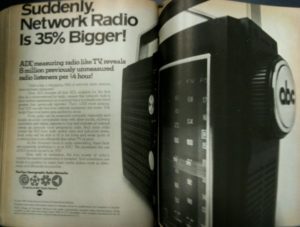
Meanwhile, competitors continue to recognize the promotional and branding value of network radio. ABC Audio and Fox News Radio both continue producing strong radio news products that reinforce their larger media brands across multiple platforms.
Ironically, CBS appears to be retreating from radio at the precise moment when audio content has exploded across American culture. Millions of podcasts are now produced every year. Vast amounts of interview audio, commentary, analysis and entertainment programming already exist across the company’s own properties and affiliated productions. Independent podcasters regularly attract audiences rivaling or surpassing traditional broadcasters.
Yet while the amount of available audio content has grown exponentially, the national distribution infrastructure capable of organizing and amplifying that content has weakened. CBS already possesses one of the most recognizable audio distribution brands ever created. Rather than abandoning it, the company could modernize it into a broader national audio platform combining news, podcasts, streaming, affiliates and on-demand programming under a trusted legacy identity.
The enduring power of the CBS brand itself should not be underestimated. In an era increasingly shaped by artificial intelligence, algorithmic content and anonymous digital publishing, trusted institutional brands become more valuable, not less. Content can be duplicated endlessly. Brand credibility cannot.
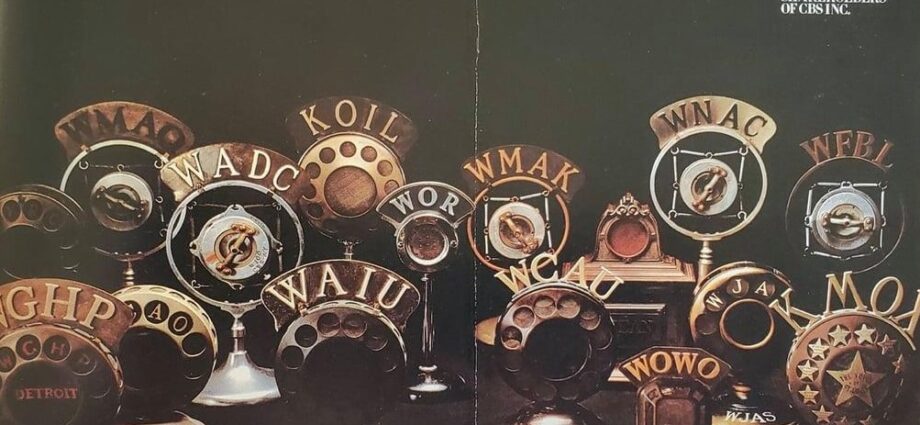
Even today, the CBS radio sounders remain among the most recognizable audio identities in American broadcasting. The famous CBS “chirp” tones and authoritative top-of-hour news bumpers still instantly signal credibility, urgency and national scale to millions of listeners who grew up hearing them emerge from dashboard speakers, kitchen radios and overnight affiliate broadcasts. And the CBS brand helped define the stations themselves; WBBM Chicago, KNX Los Angeles, KCBS San Francisco, WCAU Philadelphia, KMOX St. Louis, WEEI Boston and WCCO Minneapolis had a cachet because of the CBS affiliation. This affiliation still carries weight in a fragmented radio era.
The weakening of CBS radio did not happen overnight. After Westinghouse Electric Corporation acquired CBS in 1995 and integrated it with Group W Radio operations, there were hopes that the combined companies would strengthen the CBS radio identity through larger national synergies. Instead, much of the opposite occurred. Consolidation often produced homogenization.
In major markets, legendary local radio identities gradually lost distinction. New York once supported two competing all-news giants in WCBS and 1010 WINS, each with its own newsroom culture, presentation style and audience identity. Over time, consolidation reduced that competition and weakened the uniqueness of local radio journalism in many American cities.
At the same time, CBS increasingly treated radio primarily as a news utility rather than as a complete entertainment and audio ecosystem. In earlier decades, the company at least experimented with broader audio programming concepts such as the CBS Radio Mystery Theater revival during the 1970s. The future does not require a return to old-time radio formats, but it does require recognizing that audio audiences still exist at enormous scale across multiple platforms, and entertainment and music is a part of radio listening.
The pending Paramount Global merger with Skydance Media presents an opportunity to rethink the role of CBS Radio rather than quietly allowing it to fade away. Instead of shrinking the operation further, CBS leadership could reposition the network as a modern national audio brand that integrates podcasts, breaking news, affiliate distribution, streaming content and entertainment programming under one of the most respected names in American media.
If the broader Paramount-Skydance-Warner structure ultimately comes together, the combined company would control an immense reservoir of audio-capable journalism and entertainment content from CBS, CNN, HBO, Warner Bros. and dozens of other properties, making the retreat from national radio distribution even more puzzling.
At the very moment America is drowning in audio, CBS may be preparing to abandon one of the few audio brands that still means something nationally.
J. Garland Pollard IV is editor/publisher of BrandlandUSA. Since 2006, the website BrandlandUSA.com has chronicled the history and business of America’s great brands.