








































Wall Street Journal online on April 18, 2012 discusses the idea of reviving dead brands and their usefulness for the small entrepreneur. See Old Brands Get a Second Shot. The November 2010 Smart Money features a story by Anne Kadet on orphan brands, and mentions BrandlandUSA. QSR, for quick service restaurants, used our advice on branding in the event of a bankruptcy in the October 2010 article Back from Bankruptcy.
Some of our posts appear on the site Seeking Alpha. Sacramento Bee mentioned us for our search for
Sea & Ski
Read our commentary in Richmond's Style Weekly on the future of (the late) Circuit City at
Advice for Circuit City. See a Toledo Blade Story on the future of a historic White Tower restaurant. Read Editor Garland Pollard's personal writing clips online at www.garlandpollard.com.
BrandlandUSA is syndicated on nearly a dozen web partners each day, including Newstex, which puts us on Lexis/Nexis. This increases our reach by thousands each week:
NEW YORK - The Vera brand, worn by my third grade teacher Mrs. Guion, continues its revival.
Vera, not to be confused with Vera Bradley and Vera Wang, owns the prints, original artwork, scarves, trademarks, and copyrights of the late designer and artist Vera Neumann. Neumann is known for the bold prints and patterns she created in the 40s, 50s and 60s. Vera was known for its prints and patterns, a sort of American Marimekko, in particular scarves. They are identified by a signed Vera on the corner of patterns. Pictured at right, a pattern on their website.
Their website says that the current Vera Company owns the extensive library of prints, original artwork, scarves, and the trademarks and copyrights of the late, iconic American artist, Vera Neumann. A report in Home Textiles Today says that the brand will be licensed by Town & Country Living, and expanded into housewares and linens.
Vera began on her kitchen table, and it grew into a multi-million dollar business. The company has a notable connection, in that Perry Ellis worked for Vera, and the company spawned Perry Ellis as a designer. Many famous women wore Vera, including Marilyn Monroe.
The brand was also worn by Mrs. Guion, my third grade teacher at Norfolk Academy, who as I recall had a particular affection for Vera scarves. She was a particularly stylish lady and in addition to her Vera scarves, she drove a Mercedes. In between SRA tests and bean-bag spelling tests in the early 1970s, she never missed an opportunity to sport the scarves.
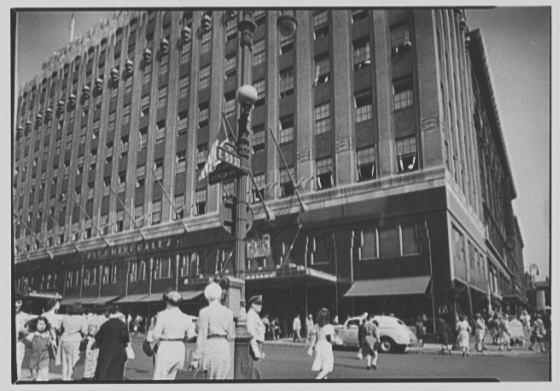
NEW YORK – The recent release of 870,000 images to the public at the New York City Department of Records has caused excitement for history and photography buffs around the world. The digitization project includes routine street-scape photos taken by the city for tax purposes, as well as other pictures.
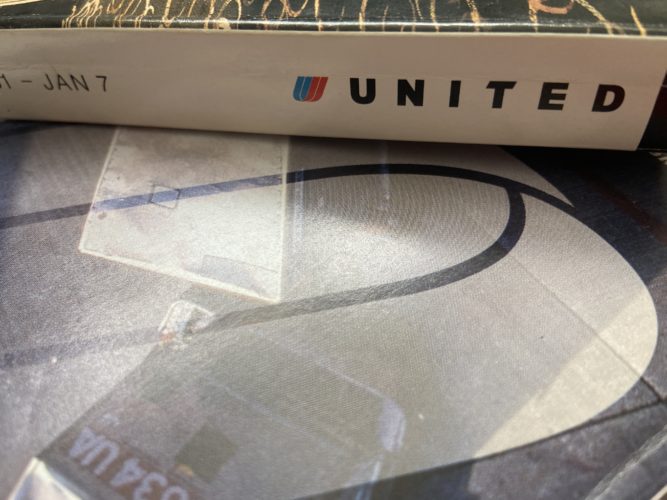
Featured on the main page of the New York City Department of Records is an undated photo of the S.S. United States and S.S. America, both liners of the now defunct United States Lines. The photo has to be before 1964, as S.S. America (in front) was sold by United States Lines in 1964.
While these Mad Men era vessels longer sail, they are still attractions, though not by design. The S.S. America, which had a slew of owners after she was sold by United States Lines in 1964, wrecked and broke off of Fuereventura, in the Canary Islands. Unlike the Costa wreck in Italy, there was no push to have it moved, and it became a stop on the tourist map there. Now is apparently (and according to Wikipedia) only barely visible. [Read more →]
One of the biggest stumbling blocks for orphan brand names is the companies that drop them, and then seek to keep them away from new owners by way of lawsuits and intimidation.
American business history is rife with hundreds of thousands of brand names that have been dropped, discontinued or made bankrupt by company managers. In some cases, these brands just lie fallow, with no one picking them up. Many are not worth reviving; either the original product was not compelling enough or the concept was lame.
But in many cases, the products or names were interesting, and companies seek to hold onto the brand, not to develop it, but to keep it away from anyone else. In the best cases, companies seek clever ways to keep the value of the brand alive, just in case it might be of use another day. Recent cases of this include the revivals of the Hyatt House and Datsun brands.
But in the worst cases, companies sue small entrepreneurs after they have trademarked a discontinued brand, saying that the new startup is “confusing” the marketplace. They have no intention of doing ANYTHING with the brand, and instead just swoop down reluctantly with high priced lawyers ONLY when some clever entrepreneur else sees value there. [Read more →]
One of the most venerable names in American inventing and entrepreneurship is Powell Crosley (1886-1961), an innovator who is credited with the first economy car, the first fax machine and the first lighted baseball field. Pictured here is the Crosley car, seen at an auto show on St. Armand’s Circle in Sarasota.
Crosley was one of those amazing men who seemed to do and try everything, and much of it worked. Owner of the Cincinnati Reds, he also sold his own marque of car, radio and all manner of other invented items, mostly home appliances. The way he looked at business life was rather like an Asian corporate mogul, selling all manner of disparate items all under the same Crosley banner. He served the mid-market, and continued innovating to give his customers more useful goods. [Read more →]
Last week, I was in a Wells Fargo branch, looking at a beautifully produced booket/story of the company. It included an explanation of how it ran stagecoaches and ran money to the West, and detailed many of the innovations of the hundreds of banks that made up what is now Wells Fargo. Inside the leaf was a double spread of all of the banks that were merged to make Wells Fargo; it seemed to be a very complete list.
The message? What a company with history, and a sense of itself, and its past. Wells Fargo is known for its archives, and they have put them to good use in their branches.
But all the goodwill was undone today with the launch of Abbot Downing, a trust company for high net worth folks who bank with Wells Fargo. The Abbot Downing name apparently comes from the carriage makers that made Wells Fargo’s carriages oh so long ago. The two names have nothing to do with banking, nothing more than a marketing ploy. Perhaps there are worse things (such as one of those contrived names), and this name has a good chance of succeeding because Wells Fargo has so many customers that it can market to. [Read more →]
Got to love the funny little American brand names that serve small product niches. With these brands, the product markets are small, and so is the competition. Little advertising is needed, and is mostly word of mouth.
One such niche is the category of brands that solve unique problems; in this case the “problem” is people who leave drink glasses on furniture without a coaster. [Read more →]
So many fragrances get forgotten, ruined or changed, but one that has survived for men is Eau Sauvage by Christian Dior. Sadly, most department stores don’t stock it, and you have to find it at those cheesy generic perfume shops located in sub-leased spots in the mall. It’s a stinky world indeed when stinky Polo survives 30 years in department stores, but Eau Sauvage does not.
Eau Sauvage was released in 1966; it is still a total classic and sold around the world. Apparently, its key ingredient is hedione (also known as methyl dihydrojasmonate), which is a chemical copy of a jasmine smell. It inspired a whole line of other related fragrances.
Eau Sauvage was created by the late Edmond Roudnitska, a self-schooled Frenchman perfumer who created other scents that included Diorissimo and Elizabeth Arden’s On Dit and It’s You, as well as some scents for Rochas. Roudnitska, who grew up in Nice, eventually moved to Paris to create perfumes. His firm Art & Parfum is apparently still around, run by family. [Read more →]
For those of us who grew up in the 1970s, a Hyatt House was a sort of hotel paradise. Yes, there were Ramada Inns and Holiday Inns, and these were actually decent places for everyday family trips and such. But in terms of a really smart, slick hotel, a really modern hotel, where the food was good and the graphics were spiffy…well there was only one brand, Hyatt.
Of course Sheraton and Hilton had new hotels, but those were brands with glamour from an earlier time. Hyatt (and maybe a bit Omni, though there were only a few) was fresh and new in the 1970s.
So it was a bit of a surprise when I saw that Hyatt was re-branding the Summerfield Hyatt extended stay brand as Hyatt House, but in their blog, about it, they did not mention the Hyatt House history. In the Hyatt blog item, Gary Dollens, Global Head of Franchise and Select Brands, and Kristine Rose, Vice President of Select Brands, talk about the “new” Hyatt brand. Whether they mention the history or not, it’s a smart move to use the Hyatt House brand, as the name has much equity with anyone over 40. It’s a true throwback brand, the original identity of the company.
Even Richmond, Virginia had a Hyatt House. The Richmond Hyatt opened in 1974; it was one of 52 Hyatts around the country, most of them Hyatt Houses. While it was made of Virginia mossy brick, it was totally modern and was in a wooded parcel just across Broad Street from the Gordon Bunshaft-designed headquarters of Reynolds Aluminum. Having a Hyatt House was a sort of badge of honor for the city; if you had one you were big time.
The Richmond Hyatt House hotel was known for all sorts of shenanigans on parents weekends and such for the city’s prep schools. Unfortunately, it’s a low-tier hotel now. In each city, the Hyatt was a bit different; no cookie cutter.
There were many other Hyatts that became infamous, including what is now the the Andaz Hollywood, which was a Hyatt House and made a cameo in this Rockford Files Episode. There was also the Mills Hyatt House in Charleston, and the Del Monte Hyatt House in Monterey, California (still a Hyatt). There were also Hyatt Regency hotels, but those were all mega-hotels.
History Starts in L.A.
The Hyatt brand started with Jay Pritzker’s purchase of the LAX Hyatt House in 1957. The company reinvented hotels in the 1960s and 70s with their massive atrium hotels, including John Portman’s design for the Atlanta Hyatt Regency, which made architectural history and is discussed by Tom Wolfe in his From Bauhaus to Our House diatribe.
As the Hyatt House brand grew, it made it into the pop culture as Hyatts were often the places where rock stars, staying in new coliseums and arenas built around the U.S., would stay. For instance, Warren Zevon’s “Poor Poor Pitiful Me” talks about the Hyatt House; the song was later covered by Linda Rondstadt. It goes:
She asked me if I’d beat her
She took me back to the Hyatt House
The re-use of the brand is proof that while business trends change, and sometimes brands are modified, very often old concepts can be reinvented as new ones.
Keep your old brands around; you might need them four decades later.
In the heyday of the turntable, there were many great brand names. The turntable was the next step from the Hi-Fi (made by folks like Zenith and Philco Ford), and a turntable and receiver perfectly matched the era of the LP, when audio quality began to be an issue when you listened to music on a “stereo.”
Some brands:
In the 1960s, Garrard was the legacy brand. I had one in the 1970s, but it was, by then, the cheap end, and was lots of plastic.
By the 1970s, Technics by Panasonic had the quality cheap end. Technics was upscale from Panasonic (which made transistor radios and cassette players), but it was still among the cheaper ones at places like Circuit City. Still, they were good quality and design for their price.
Pioneer had the middle. Other brands in the middle were JVC, BSR, ADC and Marantz.
Yamaha was a bit better than Pioneer, and it had the advantage of being quite stylish. Plus, Yamaha also made tuning forks and pianos so that made them “high cred” with snobby audiophiles.
Kenwood had many followers; can’t recall why though.
Fisher was well regarded, as was Sansui.
The top was defined by the likes of Denon.
Dual tables had a mystique.
Fancy but a bit prissy and aesthete were pricey brands like Bang & Olufsen.
Today, there are only a few surviving turntable brands; on Amazon I could only see brands like Technics, Crosley (really a nostalgia play) and Sony. Surprised to see a Sony brand, actually.
But the top seller was and is the Audio Technica AT-PL60. It’s automatic, and has a belt drive. Somewhere in the audiophile argument drawer is the old belt driven/direct drive issue. But today, you just can’t be picky. The Audio-Technica name (it’s a Japanese company) was all about cartridges and headphones, and was not known until recently for its turntables.
Love to get some reader perspective on turntable brands, and which were the best and what the brands symbolized.
While nostalgia can be a reason to bring an old brand back, strategy is the best reason.
And so we hear that Nissan might just bring back the Datsun brand. And it’s not because Generation X remembers that The Bionic Woman, Jaime Sommers, used to drive a 280Z, and still wants one.
Not sure why they switched brands to Nissan in the first place. The Datsun brand was very well-crafted; the cars were completely understandable. The King Cab was a bigger little pickup; the 280Z a sports machine and the B-210 a zippy little econobox. I really don’t recall anyone ever complaining about a Datsun. In fact the opposite was true; like a Honda they just go and go and go til they rust out or get wrecked.
Datsun Saves! I got one! Nobody demands more from a Datsun than Datsun. We are driven.
The Datsun brand will come back to market in the Third World (guess that term doesn’t apply anymore). Let’s write that sentence again. Reports say that Datsun will return to emerging markets such as Indonesia, India and Russia as an entry-level brand. Nissan wants to go further upmarket, and this is a way to snag the low end. A true economy car.
The return of the brand is proof that companies should not throw old brands aside. Instead, they very well may have a use for them a few decades down the line.
Below, and just for fun, a reel of Datsun ads, including an ad from Steve Wozniak.